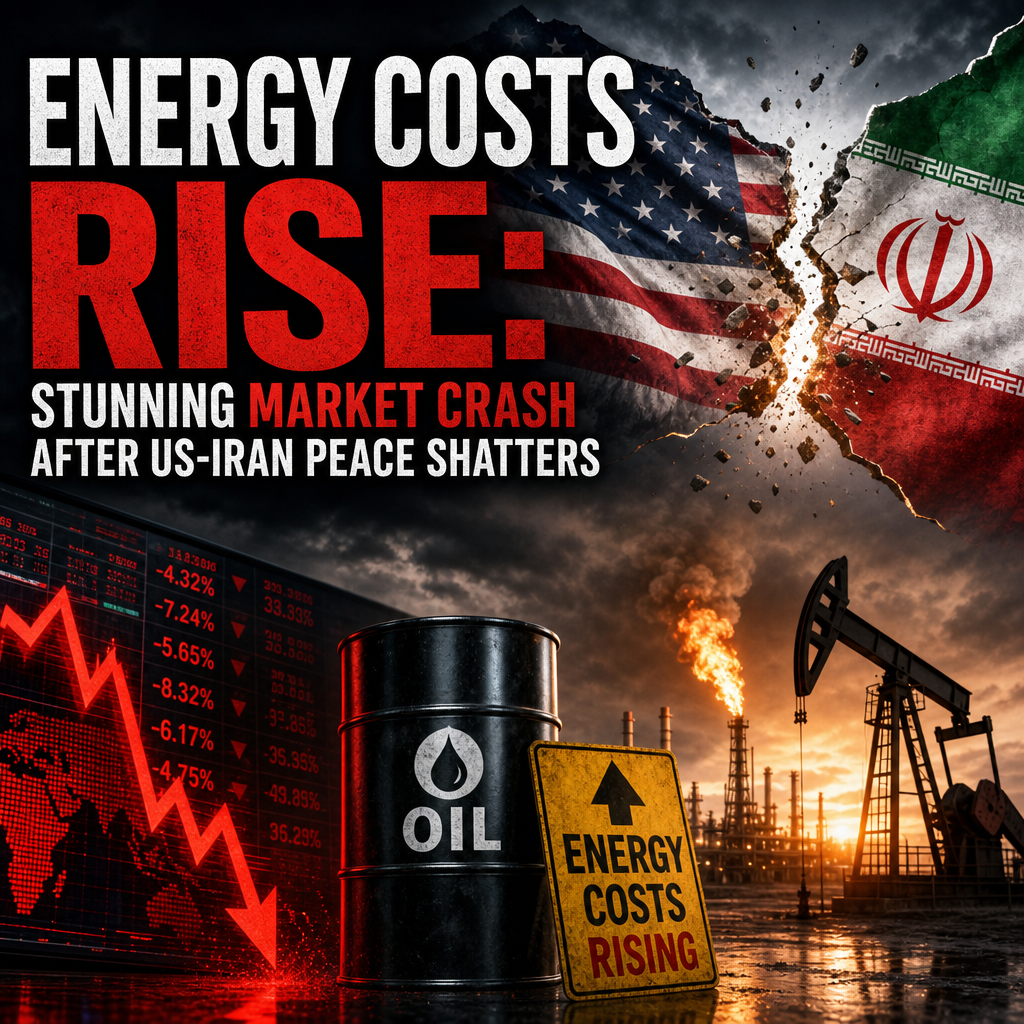
Energy Costs Rise: Stunning Market Crash After US-Iran Peace Shatters


Energy costs rise fast when geopolitics turns fragile, and the latest market turbulence is a reminder that oil, gas, and equities are still tightly linked to tensions in the Middle East.
What makes this moment especially unsettling is not just the speed of the selloff, but the way different outlets frame it. Sky News’ market-focused reporting emphasizes the immediate damage to investor confidence, with stocks falling sharply as hopes for a US-Iran thaw appeared to unravel. Al Jazeera’s broader regional coverage tends to place such developments in the context of long-running conflict, diplomacy, and the human cost of economic disruption. RT, meanwhile, often highlights the role of Western policy, sanctions, and military pressure in escalating instability rather than resolving it.



Taken together, those perspectives suggest one thing clearly: this is not simply a market story. It is a reminder that energy prices can jump for reasons that have little to do with supply fundamentals and everything to do with fear.
Why Energy Costs Rise So Quickly After Diplomatic Setbacks
Markets do not need an actual supply interruption to react. They only need the possibility of one.




That is why any collapse in US-Iran détente can move oil prices, shipping insurance, and broader investor sentiment almost immediately. Traders price in the risk of:
– disrupted shipping routes
– retaliation affecting Gulf infrastructure
– tighter sanctions or counter-sanctions
– higher freight and insurance costs
– a broader regional conflict that could limit exports
This matters because energy markets are unusually sensitive to psychology. A single military exchange, a failed diplomatic channel, or a tough new policy statement can trigger buying in oil futures before any physical disruption occurs. That in turn filters into consumer prices, transport costs, and business margins.
Sky’s framing captures the financial side of this clearly: when peace prospects weaken, stocks often fall and energy prices tend to rise because investors fear more volatility ahead. The logic is straightforward, but the consequences can be wide-reaching. Even households far from the region may feel the effects through fuel bills, heating costs, and inflation.
What the Different News Angles Reveal
Sky News: Markets fear uncertainty first
Sky’s coverage is the most immediately market-oriented. Its central message is that investors dislike uncertainty more than bad news itself. If the possibility of a diplomatic breakthrough disappears, markets quickly reassess the risk environment.
That perspective is useful because it explains the sharpness of the selloff. Financial markets often move less on confirmed disaster than on a sudden loss of confidence. In other words, if peace “shatters,” the reaction can be abrupt even before any tanks move or pipelines are hit.
Al Jazeera: The regional picture is bigger than traders
Al Jazeera typically situates Iran-related developments within a wider geopolitical and humanitarian landscape. From that angle, the market reaction is only one part of the story. The deeper issue is that years of confrontation have made the region highly vulnerable to shocks.
This approach matters because it reminds readers that energy spikes are not abstract. They are tied to real-world instability affecting governments, workers, and civilians across the Middle East. It also highlights the limits of viewing the issue through Wall Street alone. A rally in crude oil may look like a trading opportunity, but for many countries it translates into inflation, subsidy strain, and political pressure.
RT: Sanctions and Western policy are part of the equation
RT’s reporting often pushes against the dominant Western diplomatic narrative, arguing that the US and its allies have helped create the conditions for repeated crises through sanctions, pressure campaigns, and military posturing. In that telling, rising energy costs are not just a consequence of Iranian actions or failed diplomacy; they are also the product of a confrontational international order.
Whether one agrees with that interpretation or not, it raises a valid point: energy markets do not operate in a vacuum. Policy choices can tighten supply, alter trade flows, and magnify risk premiums long before any actual shortages appear. Even critics of RT’s framing would have to admit that sanctions and diplomatic breakdowns can ripple through global energy systems.
The Real Test: Temporary Spike or Broader Inflation Shock?
The key question now is whether this is a short-lived panic or the start of a more durable repricing.
If tensions ease again quickly, markets may recover some of the lost ground and oil could retreat from its highs. But if the political breakdown deepens, the consequences could spread beyond energy into:
– transport and logistics costs
– airline and manufacturing margins
– central bank inflation outlooks
– consumer spending power
– emerging-market currency pressure
The danger is that energy shocks are rarely isolated. Higher fuel prices can feed into broader inflation just as governments are trying to keep growth stable. That makes the situation especially awkward for policymakers, who may face pressure to calm markets without appearing to back down diplomatically.
A Fair Reading of the Situation
The balanced conclusion is not that one side of the story is fully right and the others are wrong. It is that each outlet is emphasizing a different layer of the same crisis.
Sky captures the market damage.
Al Jazeera captures the regional complexity.
RT captures the geopolitical criticism of Western policy.
That combination points to a broader truth: energy prices are now a barometer of international trust. When that trust collapses, costs rise quickly, investors pull back, and ordinary consumers end up paying for a crisis they did not create.
For now, the market message is clear. Even the suggestion that US-Iran peace has unraveled is enough to jolt stocks and push energy costs higher. Whether the shock deepens will depend less on traders than on whether leaders can rebuild enough credibility to keep the region from sliding further into instability.